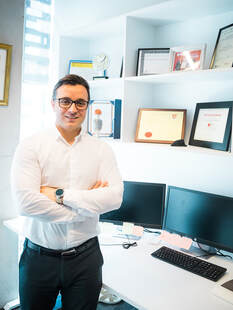
Dr Majid E. Warkiani is a Professor in the School of Biomedical Engineering at UTS, Sydney, Australia. He received his PhD in Mechanical Engineering from Nanyang Technological University (NTU) under the prestigious SINGA scholarship from A*STAR, and undertook postdoctoral training at Massachusetts Institute of Technology (SMART centre). He is NHMRC-CD fellow and also a member of Institute for Biomedical Materials & Devices (IBMD) and Center for Health Technologies (CHT) at UTS.
Dr Warkiani’s current research activities focus on three key areas of (i) Microfluidic involving the design and development of novel microfluidic systems for particle and cell sorting (e.g., circulating tumor cells, fetal cells & stem cells) for diagnostic and therapeutic applications, (ii) Organ-on-a-chip involving the fabrication and characterization of novel 3D lab-on-a-chip systems (e.g., Lung-on-a-chip, Tumour-on-a-chip) to model physiological functions of tissues and organs, and (iii) 3D micro-printing involving the design and development of novel miniaturized systems (e.g., micromixers, micro-cyclones) for basic and applied research.
Web of Science Researcher ID: AAK-7467-2020
ORCID: orcid.org/0000-0002-4184-1944
Google scholar: Link
Selected Honors/Awards
Research Grants
Dr Warkiani’s current research activities focus on three key areas of (i) Microfluidic involving the design and development of novel microfluidic systems for particle and cell sorting (e.g., circulating tumor cells, fetal cells & stem cells) for diagnostic and therapeutic applications, (ii) Organ-on-a-chip involving the fabrication and characterization of novel 3D lab-on-a-chip systems (e.g., Lung-on-a-chip, Tumour-on-a-chip) to model physiological functions of tissues and organs, and (iii) 3D micro-printing involving the design and development of novel miniaturized systems (e.g., micromixers, micro-cyclones) for basic and applied research.
Web of Science Researcher ID: AAK-7467-2020
ORCID: orcid.org/0000-0002-4184-1944
Google scholar: Link
Selected Honors/Awards
- Young Tall Poppy Award (2019).
- NHMRC Career Development Fellowship (2017).
- Nanyang Outstanding Young Alumni Award (2016).
- MIT TR35 young investigator, Asia-Pacific Region (2016).
- Fresh Science Program, Australia (2015).
- Students’ Design Gold Award, Biomedical Engineering Society, Singapore, (2014).
- Singapore-MIT Alliance for Research and Technology (SMART) Fellowship (2013).
- Best student paper award at AMN-APLOC 2011, 5-7 January, Singapore.
- Best research proposal award at NanoMemCourse 2010 at Netherlands.
- A*STAR scholarship for PhD study at NTU (2009).
Research Grants
- Australian Research Council (DP-CIB) ($505,000) for development of a new generation of microfluidic system for extracellular delivery, 2020-2023
- NHMRC-Development Grant (CIB) ($760,000) Genome-Wide Non-Invasive Prenatal Testing based on Circulating Trophoblastic Fetal Cells, 2020-2023
- Sydney Vital Cancer Grant (2X) ($20,000) for development novel 3D cancer models and intracellular delivery systems, 2019 and 2020
- Innovation Connection Grant (Lead CI) ($100,000) for continuous manufacturing and harvesting of MSCs and secreted exosomes using inertial microfluidics, 2018-2019
- Regional Collaborations Programme grant, Australian Academy of Science (CI-B) ($100,000) for design and development of a novel miniaturised sensor for explosive detection in airports, 2019
- Australia-China Joint Research Centre (JRC), (CI-C), ($936,000) for development of novel point-of-care diagnostic devices, 2019-2020
- Australian Research Council (DP- Lead CI) ($373,000) for studying physics of inertial microfluidics and its application in bioprocessing, 2018-2020
- NHMRC-Career Development Fellowship ($431,000) for design and development of a novel tumor-on-a-chip system, 2018-2021
- Australian Research Council (LIEF-CI-D) ($435,000) for purchasing microfabrication devices for development of portable and wearable sensors, 2018-2019
- Australian Research Council (LIEF-CI-C) ($600,000) for purchasing a new high-resolution confocal microscope for single molecule microscopy, 2018-2029
- Cancer Australia (CI-D) ($650,000) for analysis of Circulating Tumour Cells and its clinical application in head and neck cancers, 2018-2020
- Australian Research Council (DP- Lead CI) ($285,000) for design and development of a low-cost microfluidic system for blood fractionation, 2017-2019
- UTS competitive ECR grant (Lead CI) ($40,000) for development of a novel cancer filtration device, 2018
- UNSW competitive ECR grant (Lead CI) ($60,000) for development of novel single cell analysis systems, 2016-2017
- SMART Innovation Grant (CI-B) ($150,000) for design and development of a new mini-perfusion system for cell culture, 2015-2016
- UNSW competitive ECR grant (Lead CI) ($56,000) for development of new microfluidic co-culture systems. 2014-2015
- UNSW competitive MRIEE grant (CI-E) ($111,000) for purchase of 3D bioplotter, 2015
- UNSW competitive ECR grant (CI-C) ($40,000) for development of microfluidic systems for petroleum research, 2014-2015
- UNSW MME seed funding (lead CI) ($70,000) for purchase of 1 Wax 3D printer and a UV lithography equipment, 2016
- NUS tier-1 Grant (CI-B) ($140,000) for development a novel microfiltration platform for blood salvage, 2013-2015
- SMART Fellowship (sole CI) ($260,000) for development of a high throughput inertial cell sorter, 2013-2014
- SMART Ignition Grant (Lead CI) ($50,000) for development of a clog-free separation system for mammalian cell retention from perfusion bioreactors, 2013-2014